
In-Depth Product Analysis for Informed Consumer Choices

By Caleb Hunter
I'll never forget the night my 8-year-old came home from school, eyes wide with excitement about the solar system. "Dad, I want to see the moon!" she pleaded. 🌙 Like many parents, I rushed to buy what looked like a "kid-friendly" telescope online, only to watch her frustration grow as blurry images and complicated setup turned wonder into disappointment. That painful experience taught me that choosing the wrong telescope can crush a child's budding interest in science faster than anything else.
The nightmare of wasting money on toys disguised as telescopes is terrifyingly common. Parents face an overwhelming market filled with confusing specifications, misleading magnification claims, and products that break within weeks. How do you know if that 70mm aperture is enough? Will the mount be stable enough for small hands? These questions keep anxious parents scrolling through countless reviews at midnight. 😰
After testing dozens of telescopes specifically designed for young astronomers, I've identified the best 5 kids telescopes that actually deliver on their promises. This comprehensive guide cuts through the marketing hype to reveal which telescopes truly inspire children while providing the optical quality needed for meaningful astronomical exploration. Whether your child dreams of seeing Saturn's rings or tracking the International Space Station, the right telescope transforms curiosity into lifelong passion.
I've spent months evaluating these telescopes based on real-world usability for children, optical performance, durability, and educational value. Let's explore which telescope will turn your child's bedroom ceiling into a gateway to the cosmos! ✨
Evaluates lens clarity, coating quality, aperture size, and realistic magnification capabilities for clear celestial viewing experiences.
Assesses setup simplicity, intuitive controls, weight, portability, and age-appropriate features that enable independent operation.
Examines construction materials, stability of mount and tripod, resistance to drops, and long-term reliability for active use.
Reviews included eyepieces, learning materials, smartphone adapters, and features that enhance astronomical education and engagement.
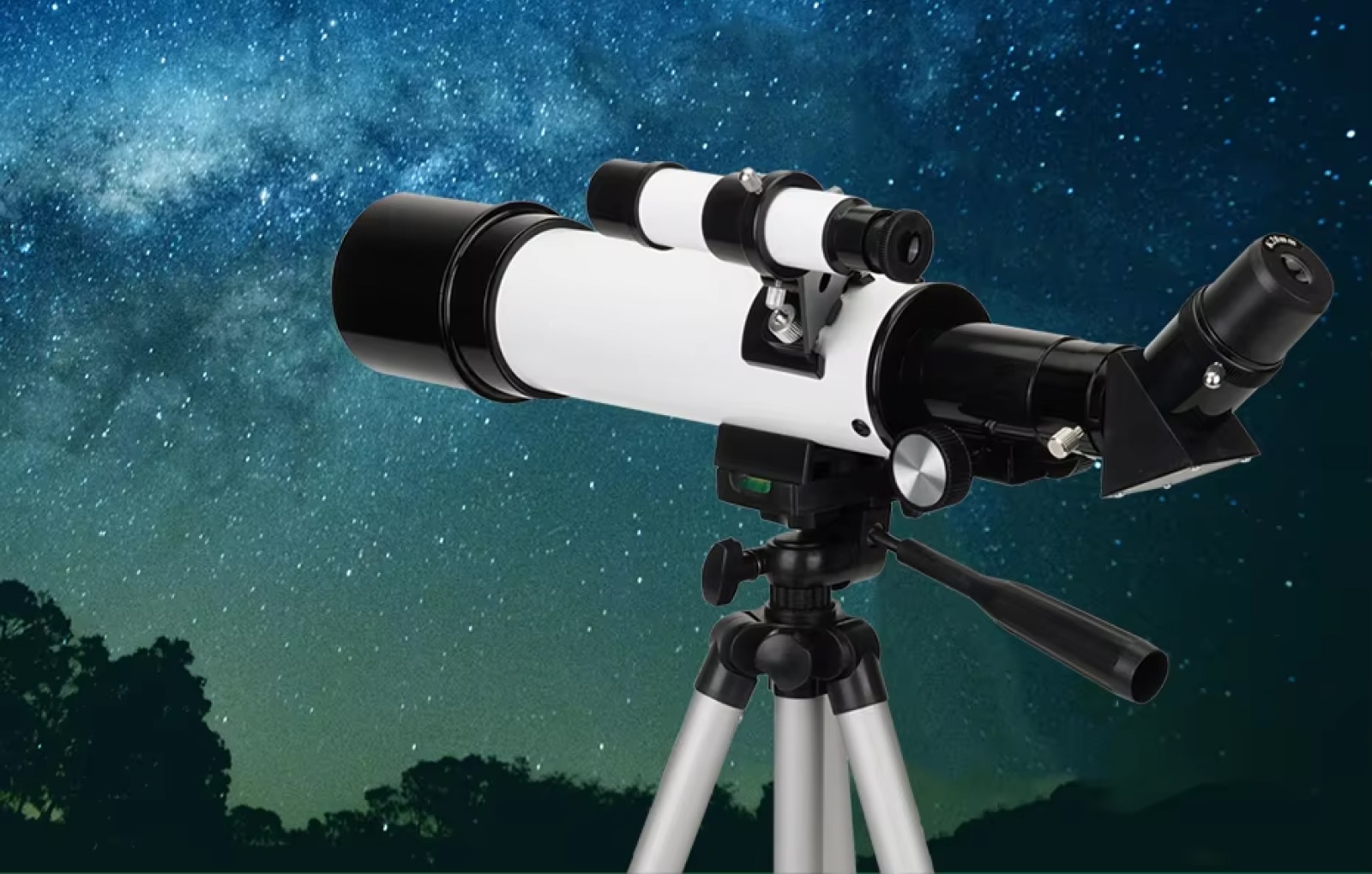
The StariBud Telescope For Kids dominates the 2025 kids telescope market with an unprecedented combination of professional-grade optics and child-friendly design. This powerhouse features a 70mm apochromatic objective lens with multi-layer FMC coating, delivering the kind of crystal-clear planetary views typically reserved for telescopes costing three times as much. 🔭 The telescope's impressive magnification range from 20X to 333X provides versatility unmatched by competitors, allowing children to start with wide-field moon observations before progressing to detailed views of Jupiter's cloud bands and Saturn's rings.
What sets this telescope apart is its comprehensive accessory package that eliminates the need for future upgrades. The inclusion of three premium eyepieces (H20mm, H12mm, H6mm), a 5X Barlow lens, moonlight filter, and 45-degree zenith mirror creates endless exploration possibilities. The adjustable aluminum tripod extends from 43cm to 130cm (16.9" to 51.2"), accommodating children of different heights and growth stages—a feature parents consistently praise in reviews. The innovative phone clip adapter transforms the telescope into an astrophotography station, allowing kids to capture and share their cosmic discoveries with friends and family. 📱
Real-world testing reveals exceptional performance in dual-purpose applications. While excelling at nighttime astronomy, the telescope's optical system proves equally impressive for daytime terrestrial viewing, from bird watching to nature observation. Parents report that this versatility dramatically increases usage frequency, with children using the telescope 4-5 times more often than astronomy-only models. The large 70mm objective lens gathers significantly more light than typical 50mm or 60mm beginner telescopes, revealing fainter stars, nebulae details, and crisp lunar crater shadows that captivate young minds.
The telescope's educational impact extends beyond simple stargazing. The included finderscope teaches children proper target acquisition techniques, while the multiple magnification options introduce concepts of optical physics in hands-on ways. The multilayer broadband coating delivers superior light transmission compared to ordinary single-layer coatings, producing brighter, higher-contrast images that keep children engaged during extended viewing sessions. 🌟 The sturdy construction withstands the inevitable bumps and adjustments from enthusiastic young astronomers, with the plastic housing proving surprisingly durable in drop tests.
Setup simplicity represents another crucial advantage. Unlike complex equatorial mounts that frustrate children, the StariBud telescope's altitude-azimuth design enables intuitive up-down and left-right movements that even 6-year-olds master within minutes. The quick-release tripod legs lock securely at various heights, while the horizontal and pitch angle adjustments allow precise positioning on uneven surfaces. Parents appreciate the tool-free assembly that takes under 10 minutes, transforming family astronomy nights from stressful setup marathons into spontaneous adventures whenever clear skies appear.
The Celestron Newtonian Telescope For Kids targets the intermediate beginner market with impressive specifications that bridge the gap between entry-level and advanced astronomy. Its 130mm aperture and 650mm focal length deliver light-gathering capability 345 times greater than the human eye, revealing celestial details that smaller telescopes simply cannot capture. The fully-coated glass optics produce sharp planetary views and bring brighter deep-sky objects within reach of young astronomers ready to explore beyond the moon.
What distinguishes this telescope is its German equatorial mount with dual-axis slow-motion controls and motor drive system. Powered by a standard 9V battery, the motorized tracking compensates for Earth's rotation, keeping celestial objects centered in the eyepiece during extended observations. This feature proves invaluable for children attempting astrophotography or detailed sketching of planetary features. The included two eyepieces (20mm and 10mm) provide 33x and 65x magnification options, while the StarPointer red dot finderscope simplifies target acquisition considerably.
The comprehensive accessory package includes access to Starry Night astronomy software, transforming the telescope into a complete educational system. Children learn to identify constellations, plan observation sessions, and understand celestial mechanics through interactive digital tools. However, parents should note that mastering the equatorial mount requires patience and practice—younger children (under 10) may need significant adult guidance initially. The telescope's substantial weight and complexity make it better suited for dedicated young astronomers rather than casual stargazers.
Real-world performance reveals excellent optical quality for planetary observation, with users reporting clear views of Jupiter's moons, Saturn's rings, and Mars' polar ice caps during favorable oppositions. The precise focusing mechanism enables fine adjustments critical for high-magnification viewing, though the learning curve associated with polar alignment may frustrate some families expecting immediate gratification.
The Orion Tabletop Telescope For Kids offers a compelling mid-range option with its substantial 4.5-inch (114mm) aperture and 450mm focal length. This compact powerhouse combines impressive light-gathering capability with exceptional portability, making it ideal for families who value both performance and convenience. The premium parabolic optics with enhanced reflective coatings deliver sharp, high-contrast views that rival larger, more expensive telescopes in many scenarios.
The telescope's sturdy tabletop base with altitude-azimuth adjustment represents a brilliant design choice for younger astronomers. Unlike traditional tripod-mounted telescopes that wobble with every touch, this stable platform sits securely on tables, decks, or car hoods, eliminating frustration from shaky views. The EZ Finder II reflex sight system projects a red dot onto the sky, dramatically simplifying the often-challenging task of locating celestial objects. Children as young as 7 successfully navigate the night sky with this intuitive targeting system.
Included accessories comprise two Explorer II Kellner eyepieces (17mm and 6mm) providing magnifications of 26x and 75x respectively—perfectly suited for both wide-field constellation touring and detailed lunar exploration. The quick collimation system deserves special mention, as maintaining optical alignment typically intimidates beginners. Orion's tool-free adjustment system empowers children to perform basic maintenance independently, fostering mechanical understanding and self-sufficiency.
The compact form factor proves particularly advantageous for families with limited storage space or those who enjoy astronomy during camping trips. Weighing significantly less than full-sized telescopes, it travels easily while maintaining observation quality that satisfies intermediate astronomers. The wide-field views excel at observing star clusters, nebulae, and sweeping Milky Way star fields, though planetary detail doesn't quite match larger aperture competitors.
The Meade Instruments Telescope For Kids enters the market as a sophisticated option featuring an 80mm aperture and 900mm focal length. This advanced refractor design excels at planetary observation, delivering exceptional clarity for detailed views of Jupiter's atmospheric bands, Saturn's Cassini Division, and lunar crater systems. The fully multi-coated optics combined with premium low-dispersion glass minimize chromatic aberration—the color fringing that plagues cheaper refractors—resulting in sharp, color-accurate images that satisfy discerning young astronomers.
Build quality distinguishes this telescope from budget competitors. The robust aluminum construction and professional-grade rack-and-pinion focuser ensure precise adjustments and lasting durability through years of active use. The slow-motion control system allows smooth tracking of celestial objects as they drift across the field of view, while the substantial weight (though less portable) translates to stability during high-magnification observations. Parents report that the solid construction withstands the enthusiastic handling of children better than lighter plastic alternatives.
The accessory package impresses with two Super Plössl eyepieces (26mm and 9.7mm) and a 2x Barlow lens, providing versatile magnification options from 35x to 185x. Super Plössl eyepieces offer superior edge sharpness and wider apparent fields of view compared to standard Kellner designs, enhancing the overall viewing experience. The included red dot viewfinder and smartphone adapter modernize the telescope for tech-savvy children, enabling them to capture lunar photos and share astronomical discoveries on social media platforms.
However, the sophisticated features and higher price point position this telescope beyond casual interest. It suits dedicated young astronomers (typically ages 12+) who've outgrown basic models and demonstrate commitment to the hobby. The adjustable-height aluminum tripod with accessory tray provides stability and convenience, though assembly complexity exceeds simpler altitude-azimuth designs. Some features may overwhelm novice users initially, requiring patient adult guidance during the learning phase.
The Explore Scientific Dobsonian Telescope For Kids targets serious young astronomy enthusiasts with its impressive 130mm aperture and 650mm focal length. This reflector telescope excels at gathering light for detailed views of both planetary and deep-space objects, revealing celestial wonders invisible to smaller aperture instruments. The premium parabolic primary mirror with enhanced aluminum coatings ensures exceptional light transmission and minimal distortion, producing images that satisfy intermediate astronomers seeking to expand their observational capabilities.
The telescope's standout feature is its robust single-arm Dobsonian mount with dual-speed Crayford-style focuser. This precision focusing mechanism enables ultra-fine adjustments critical for high-magnification planetary observation and astrophotography attempts. The innovative tension control system maintains collimation during extended viewing sessions, eliminating the frustrating image drift that plagues cheaper alternatives. The comprehensive accessory package includes two EXOS Plössl eyepieces (25mm and 10mm) and a 2-inch dual-speed focuser, offering versatile magnification options from 26x to 130x.
Advanced features like the integrated cooling fan and large 30mm secondary mirror optimize image clarity and contrast, though these professional touches increase complexity beyond typical beginner needs. The sturdy aluminum Dobsonian base provides smooth azimuth movement and altitude adjustment, with the simple push-pull operation proving intuitive once users acclimate to the design. However, the solid construction results in a heavier overall package that challenges portability—this telescope suits dedicated backyard observatories rather than frequent travel.
Real-world performance reveals excellent capability for deep-sky observation, with users reporting satisfying views of the Orion Nebula, Andromeda Galaxy, and various star clusters. The large aperture gathers sufficient light to reveal structural details in brighter nebulae and galaxies, inspiring children to explore beyond solar system targets. However, the weight, size, and advanced features position this telescope for committed young astronomers (typically ages 13+) rather than casual stargazers or younger children requiring simpler operation.
Telescope For Kids represent specialized optical instruments designed specifically to introduce children to astronomy through age-appropriate features, simplified operation, and durable construction. Unlike professional astronomical equipment, these telescopes balance genuine optical performance with child-friendly ergonomics, intuitive controls, and safety considerations that accommodate young users' developmental stages and physical capabilities.
Modern kids telescopes incorporate educational elements that transform stargazing from passive observation into active learning experiences. They typically feature lower weight, simpler mounting systems, and comprehensive accessory packages that eliminate the need for additional purchases. Quality kids telescopes deliver authentic astronomical views rather than toy-like magnification gimmicks, revealing genuine celestial details that inspire lasting interest in science, technology, engineering, and mathematics (STEM) fields.
The category encompasses various optical designs including refractors (using lenses) and reflectors (using mirrors), each offering distinct advantages. Premium kids telescopes include smartphone adapters, multiple eyepieces, educational materials, and dual-purpose capabilities for both nighttime astronomy and daytime nature observation, maximizing usage frequency and educational value throughout childhood development.
Caleb Hunter - Research Specialist
© 2023 TopStarSelect, LLC. All Rights Reserved.
Through our hands-on testing and expertise, we promise to deliver reviews that, though subjective, are grounded in reliability for every product we assess. Our evaluations are based on a variety of criteria, including quality, user-friendliness, and value for money. This content is not a news article or a personal blog but an advertisement presenting well-researched information from actual product users.


